Hong Kong faces tight land resources, and public housing units are generally small. Many families face the challenge of multiple family members sharing space. How to effectively partition rooms to both improve living quality and fully utilize limited space has become an important issue. We裝修佬have compiled several common methods for partitioning rooms in public housing, including their pros and cons, as well as major taboos and considerations when partitioning, to help public housing residents create a comfortable living environment.
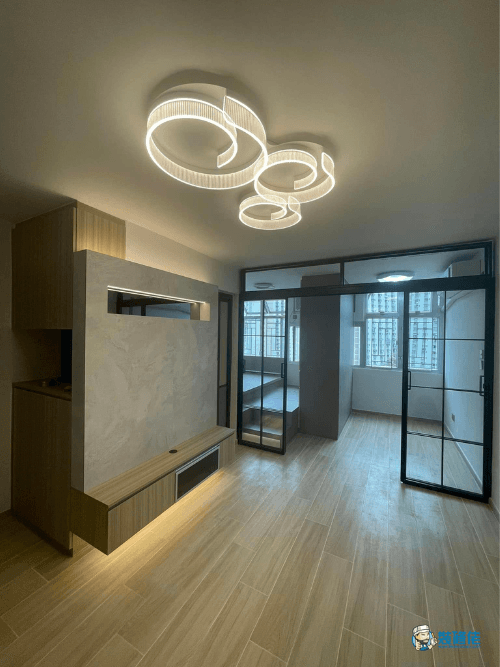
Glass partition designs offer high flexibility, allowing residents to choose different frame materials (such as wood or aluminum frames) and glass styles (such as clear, frosted, or tinted) according to personal preference. This type of partitioning generally comes in two forms:
Fixed Glass Partitions
Pros:Higher privacy, as the surrounding enclosed glass walls separate sound and odors from entering or leaving. Better durability, as there are fewer moving parts and the structure is stable.
Cons:If the glass is damaged, replacement costs will be higher. When returning the public housing unit, restoration costs may also be higher, and it will be difficult to alter the partition area or design later on.
Sliding/Folding Glass Partitions
Pros:High flexibility, allowing free adjustment of space as needed. For example, they can be opened during the day and closed at night to create a separate space. Additionally, the design of sliding or folding doors can be adjusted according to space requirements, increasing or decreasing area.
Cons:The durability of these designs is lower due to more moving parts, making them prone to damage, and long-term use may result in jerky sliding.
Using a large wardrobe as a partition screen is a common design method that provides both storage and private space. Large wardrobes can be designed in various ways:
Full-height Wardrobe:Designed as an enclosed space, providing excellent privacy isolation.
Open-shelf Design:Provides ventilation and avoids a sense of spatial oppression.
Pros:
Versatile functionality, serving as both storage and a room partition, maximizing space utilization.
Various design styles can be chosen to suit family renovation needs and provide a sense of security.
Cons:
Compared to fixed walls, wardrobes offer less privacy and sound insulation, and odors may seep through gaps.
Standard wardrobes require deeper space (550mm-650mm), which may reduce the room's usable area.
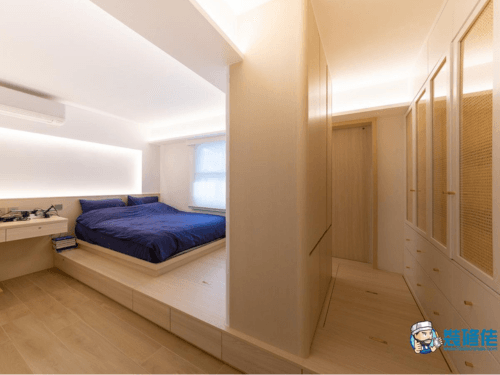
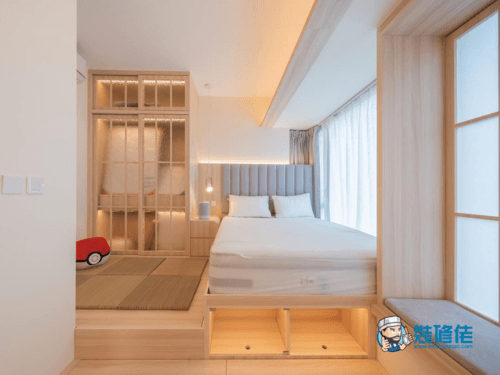
3. Loft Bed/Platform Bed
A loft bed is an elevated bed built using cabinets, offering flexible design. The bed frame can be raised as needed, and the space underneath can be designed as a multi-functional area with a wardrobe, desk, etc.:
Pros:
Occupies less space, making full use of vertical space, suitable for public housing units of approximately 300 sq ft.
Compared to buying furniture separately, integrating into a loft bed design is usually more cost-effective, saving expenses.
Relatively higher privacy, as the space under the bed is not easily visible, creating a small private area.
Cons:
The internal space of a loft bed has poor ventilation, making it prone to dampness. Long-term use may lead to mold or bacterial growth.
Cleaning is difficult, especially the gaps between the bed frame and the wall, which are troublesome to clean.
For taller users, a loft bed may create a sense of spatial confinement and restrict movement.
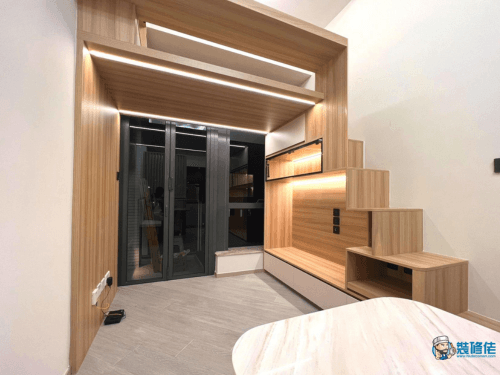
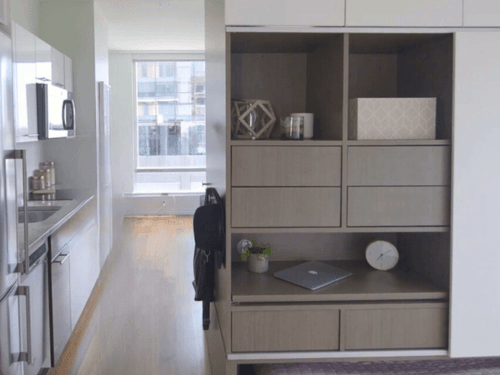
Double-sided partition cabinets are a way to divide space using custom-made furniture, allowing for the addition of functions like a workbench or wardrobe as needed:
Pros:
Multi-functional design, flexibly configurable according to family circumstances to meet different needs.
High space utilization, effectively dividing independent living areas.
Cons:
Design and construction require higher costs, and custom-made furniture must comply with public housing renovation guidelines.
Improper design may lead to inconvenient use of space or a cluttered visual impression.
Major Taboos for Public Housing Room Partitioning
Do Not Alter Original Structures
According to the Housing Department's 'Public Housing Renovation Guidelines,' certain structures such as load-bearing walls and main doors must not be altered. Such alterations may lead to violations and incur high restoration costs upon lease termination.
Avoid Buying Off-the-Shelf Furniture
Off-the-shelf furniture usually cannot be adjusted to fit the space, potentially leading to wasted space or inconvenience. It is recommended to choose custom-made furniture to ensure appropriate dimensions and compliance with public housing layouts.
Learn more about different property types for freeRenovation Quote:
***The content and images of this article are provided by the column author裝修佬.***
Book a MooneyBird Real Estate Marketing Consultant now to enhance the effectiveness of your own-brand property website and increase online client enquiries!
Seize the Opportunity Book a Consultation
Please fill in the form below. We will contact you as soon as we receive your message.
MooneyBird editorial team · Last updated February 17, 2025