

WhatsApp Marketing
客戶已讀不回點算?地產代理跟進客戶嘅 7 次接觸節奏表
個客啱啱睇完樓。傾咗成個鐘,佢話「幾好喎,我諗吓」,仲主動加咗你 WhatsApp。你返到公司心情唔錯。第二日你 send 一句「您好,考慮得點呀?」——已讀。第三日再 send 一次——已讀。到第五日,你手指停喺個鍵盤上面,唔敢再撳。驚煩親人,驚畀人…

In the real estate industry, 'potential clients' are more than just numbers in data and market reports. In fact, almost everyone may have a need to rent, buy, sell, or invest in property, which presents endless opportunities for real estate agents. The key is how to identify and seize these opportunities, and the core lies in asking the right question: 'Do you know anyone who might need…?'
Cleverly integrating questions like 'Do you know any friends who…?' into daily conversations allows real estate agents to discover more potential clients without making the conversation feel forced. This questioning pattern has an exploratory nature, enabling the other person to easily recall relationships within their social circle, for example:
This questioning approach guides the conversation and prevents the other person from feeling pressured or forced. Through such relaxed interaction, they are more willing to engage further, sometimes even proactively sharing potential needs or recommendations.
Adding words like 'might,' 'considering,' or 'perhaps' to questions can make them sound more open and probabilistic. For example, asking 'Do you know any friends who might be interested in this property listing?' sounds much more natural than directly asking 'Do you know anyone who might want to buy property?' This open-ended language allows the other person to relax and recall potentially relevant individuals, thereby providing useful information.
When you ask questions like 'Do you know anyone who might be interested in XXX property listing recently?', the other person often considers if they have similar needs themselves. This questioning method is not about forcing them to become a potential client, but rather indirectly addressing their problem by asking if they know someone. This approach is highly effective because many people will proactively think about their own situation and naturally reveal their needs.
For instance, asking 'Have you heard of anyone considering buying property recently?' The other person might say, 'Actually, I'm thinking about it too.' This not only increases opportunities for potential clients but also makes the conversation flow naturally.
When real estate agents face potential clients, being too eager to sell can make the other person feel pressured. However, the 'Do you know anyone who might need…?' questioning approach appears gentle and professional. This is not direct selling, but rather a way of suggesting and helping, making the other person willing to participate and provide recommendations without pressure.
Here are a few examples from daily conversations to help you understand how to apply the 'Do you know anyone who might need…?' strategy in different scenarios:
These questions not only stimulate the other person's memory but also spark more topics, helping real estate agentsPrecise Questioningand deeply understand potential client needs.
Continuously using questions like 'Do you know anyone who might need…?' can build long-term client relationships. When the other person perceives your professional and thoughtful communication style, they will be more willing to introduce you to people in their circle who have needs. This 'referral effect' not only expands your potential client network but also builds word-of-mouth, allowing your real estate business to enter a virtuous cycle.
In the real estate industry, almost everyone can be your potential client, and the question “Do you know anyone who might need…?” is the key to unlocking these opportunities. By asking open and relaxed questions, you can subtly integrate into their social circle, not only deepening conversations but also making potential clients feel comfortable and more willing to engage. Using this strategy can help you uncover more business opportunities and build your own client network, becoming a top professional in the real estate industry.
Digital Age Real Estate Agent Communication Skills: How to Effectively Follow Up with Clients
How to help buyers make quicker decisions through precise questioning?
Overcoming the Fear of Rejection: Essential Communication Tips for Hong Kong Real Estate Agents
Essential Communication Tips for Real Estate Agents: How to Take Control of the Conversation?
延伸閱讀:發掘到潛在客戶之後,點樣跟進到成交?睇吓 地產代理跟進客戶嘅 7 次接觸節奏表.
Please fill in the form below. We will contact you as soon as we receive your message.
個客啱啱睇完樓。傾咗成個鐘,佢話「幾好喎,我諗吓」,仲主動加咗你 WhatsApp。你返到公司心情唔錯。第二日你 send 一句「您好,考慮得點呀?」——已讀。第三日再 send 一次——已讀。到第五日,你手指停喺個鍵盤上面,唔敢再撳。驚煩親人,驚畀人…
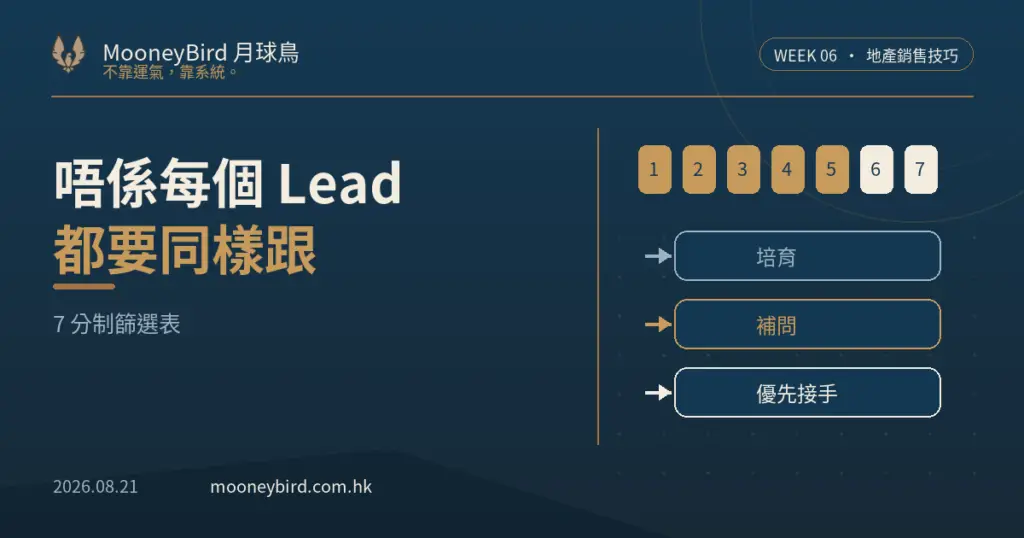
一日十個查詢,唔代表十個都要即刻約睇樓。有人只係問價,有人已經有明確時間表;如果全部放喺同一個 WhatsApp 清單,代理只會靠感覺追客。 Lead qualification…
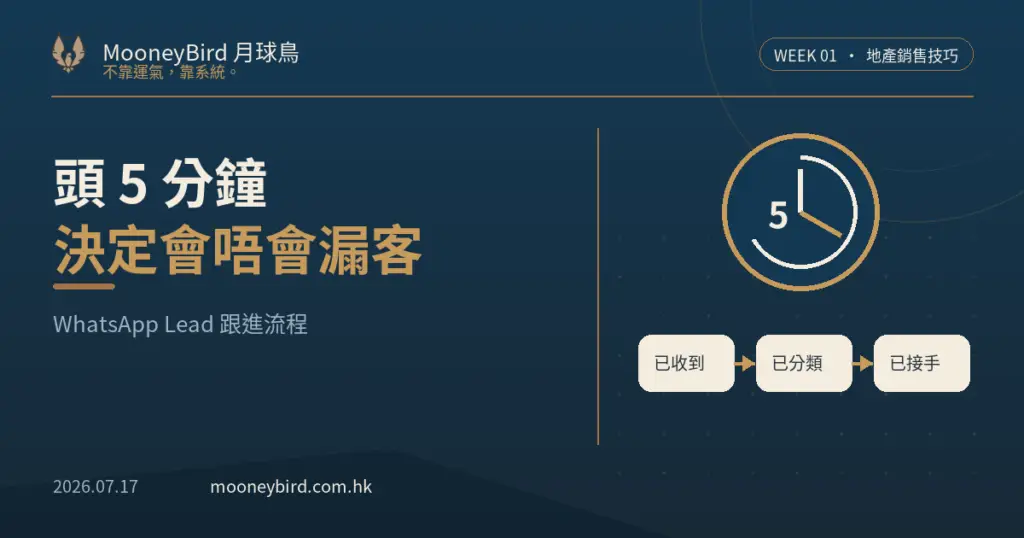
客人睇完一個樓盤廣告,撳入 WhatsApp 問一句:『仲有冇?』如果你當時見緊客,兩個鐘後先覆,對話可能已經去咗第二個代理度。問題唔一定係你唔勤力,而係你冇一套任何同事都跟到嘅即時回覆流程。…